


By Hasnain Walji. Ph.D
To be in Zanzibar for Arbaeen is to stand where it all began. — at the first Khoja Shia Ithna-Asheri mosque in the world — Juni Misit, the Kuwwat-ul-Islam Jamaat mosque.
This soil holds the birth of our Ithna-Asheri heritage. And once again this year, it held our grief.
The salty ocean breeze carried the weight of lament. The carved Swahili, Indian, and Arab doors stood witness as voices rose from the Imambargah. In a world that bows to power , I saw a community gather around the memory of a man who chose to die thirsty so the future could drink from truth.
It was more than a commemoration. It was a reunion. From Dar es Salaam and Mombasa, from as far away as Vancouver, Toronto, New York, Orlando, London, and Birmingham — they came. Sons and daughters of Zanzibar returning to the island that once cradled their heritage.
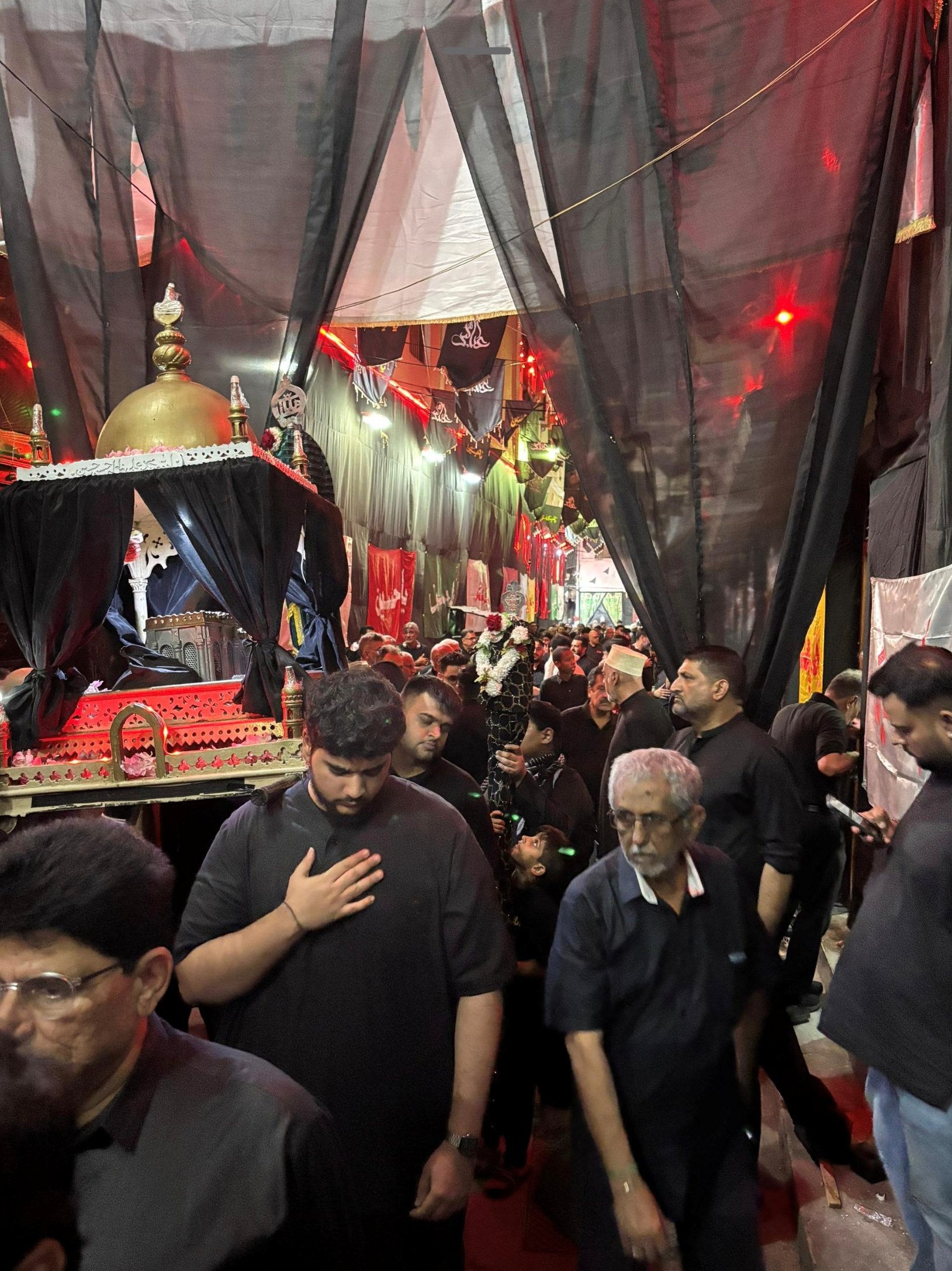
The day began at Mehfil Abbas. The majlis for men was heavy, voices breaking in unison. Across the road , women filled the Kuwwat Imambargah with nohas that echoed against coral stone walls. Grief was not divided. It was a tide, rising and falling, touching every heart.
As it had done the past week, the mawkeeb outside the Kuwwat Imambara continued to serve karak chai and and thousands of plates of Zanzibar mix and other delicacies to all the passerby to the locals as well as tourists.
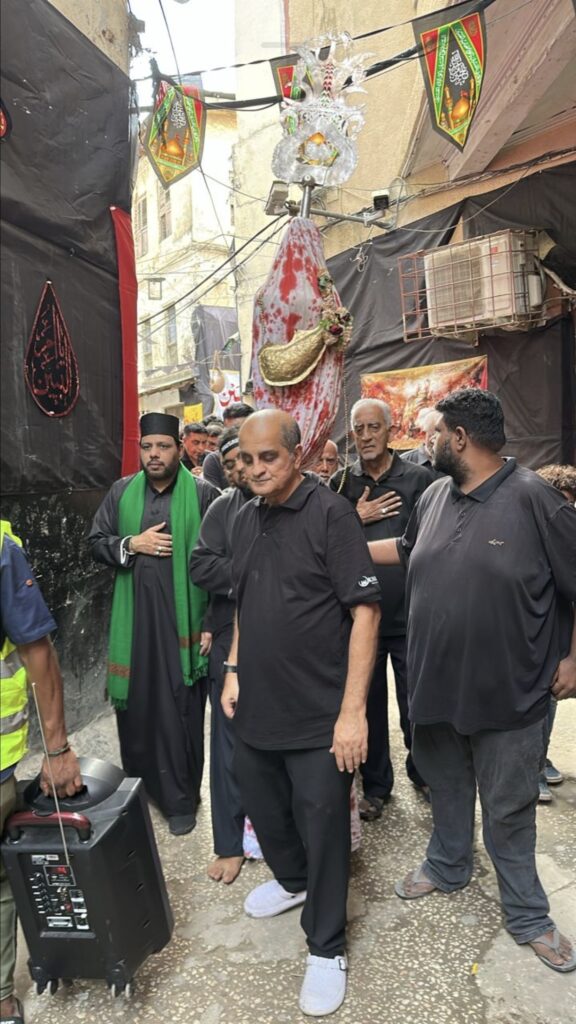
By morning, the streets stirred, with azadar paying homage at Mehfil-e-Abbas, to the newly renovated Mehfil-e-Tazia, to Mehfil-e-Bibi Fatema, and then on to Mehfil-e-Shahe Khorasan. We walked those narrow alleys of Stone Town—the rhythm of matam beating against the silence of the centuries-old walls. Men and children carried alams as elders pressed forward, their canes clicking against the stones, yet their steps unyielding, as they reminisced on the century-old traditions ever so vibrant today.
We paused for Jumua Salaah at Nai Masjid. The call to prayer mingled with the chants of mourning, a harmony only Arbaeen could create. Later, at Mehfil Ali Makam, men and women gathered for ziyaarat and niyaz.
And it struck me then: this community does not measure victory by power. Its foundation is conscience. Its inheritance is principle.
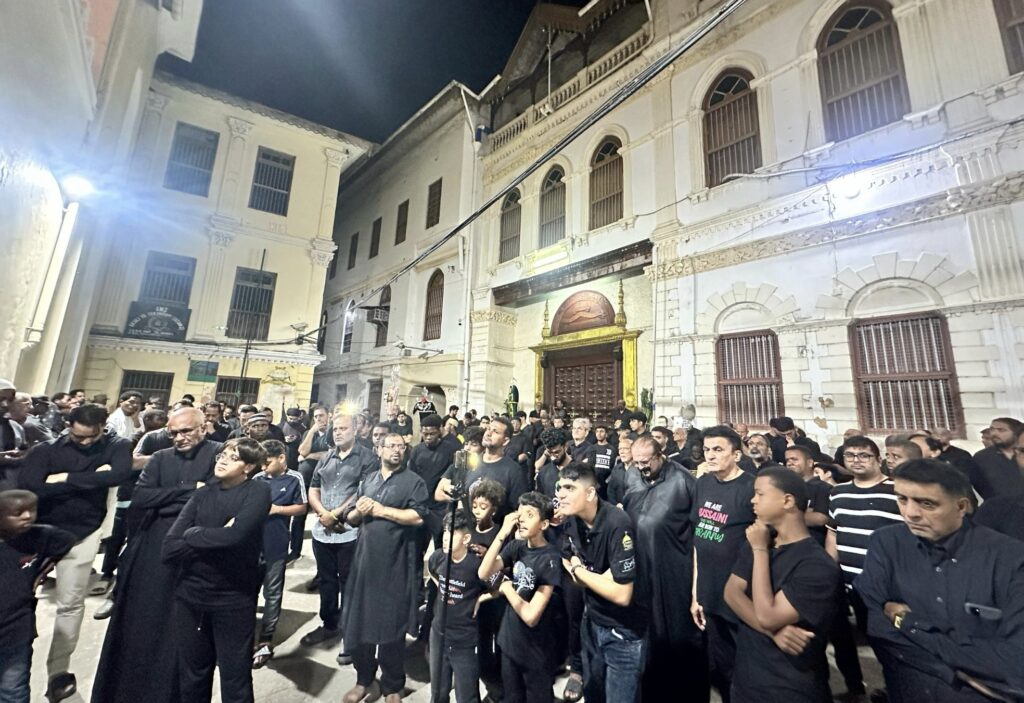
The juloos from the Imambargah to Darajani was more than a march. It was a living heartbeat. Beats of matam reverberated down the streets. On this day, the only sound was lament. At Kabrastan, the soil of Zanzibar mingled with the tears of Husayni lovers from across the world.
Evening fell. A majlis outside the Imambargah as lanterns flickered against the humid night air. Matam in the streets. The march toward the Karbala Project. Upstairs, a play reenacted Karbala — the voices straining to retell what no tongue can truly capture.
Then more suff matam. Finally, the return to Mehfil Ali Makam. Nyaz was shared — the taste of devotion on every plate. And in a century old tradition the alams returned quietly to its place in the Imambargah.
And so it came full circle. To mourn Imam Husayn (AS) in Zanzibar was to mourn him on sacred ground — the ground of Juni Misit, Kuwwat-ul-Islam Jamaat mosque, the first Ithna-Asheri masjid of the Khoja world. That heritage made every lament more poignant, every tear heavier with meaning.
What I saw were not strangers to grief. They were its students. Its torchbearers. Faces carved with sorrow. Steps carrying dignity.
And as I stood among them, I realized: Arbaeen in Zanzibar is not only a memory of Karbala. It is the island itself bearing witness — that faith survives not because it conquers, but because it refuses to surrender. It was this very spirit that Khoja leaders of the time established our first mosque despite opposition from powerful adversaries and threats. Their legacy lives on.